


Larch Colouration and Weathering
Why larch colours, and what to expect as it weathers
Freshly cut larch starts out as a warm, golden-yellow to pale reddish-brown colour. Over time, as with all timbers, its colour will change.
When timber goes into an outside environment and is exposed to sunlight and weather, it will gradually change its colour to what is often described as a light silvery-grey.
This colour change is a result of both UV and moisture exposure.
The change in colour can be inconsistent, it may not occur evenly across all surfaces of the exposed timber. For example, the weathering process may happen more quickly on a south facing wall compared to a north facing one; or where part of the timber is tucked under an eave it may weather more slowly than the more exposed timber further down the wall.
What can be done about the colour change?
Maintaining the original colour
There are products on the market that say they will maintain the original larch colour. However, we advise a cautious approach to using these kinds of products: have a thorough look into their technical information regarding their suitability, advised application, and maintenance requirements, and look up reviews from other users – especially reviews which return to evaluate the products performance long term.
In our experience, many of these preservatives (especially oils) will look good for a while before degrading into a finish that looks patchy and unsightly as the product wears.
Accelerating the silvering process
At Scottish Wood, we’ve heard from customers who have tried a product called “SiOO” and have reported reasonable results. Rather than trying to preserve the original colour of timber cladding, SiOO accelerates the weathering effect, fading the fresh wood colour more quickly than would otherwise happen naturally. It also removes much of the inconsistent colour change you get with the natural weathering mentioned above.
Scottish Wood does not sell SiOO, and there may be other products that have similar results.


The look and durability of weathered larch
The time it takes for larch to weather varies based on its exposure to both moisture and UV. Here are some examples of the weathering and durability of untreated larch cladding.
Board on board clad farm buildings
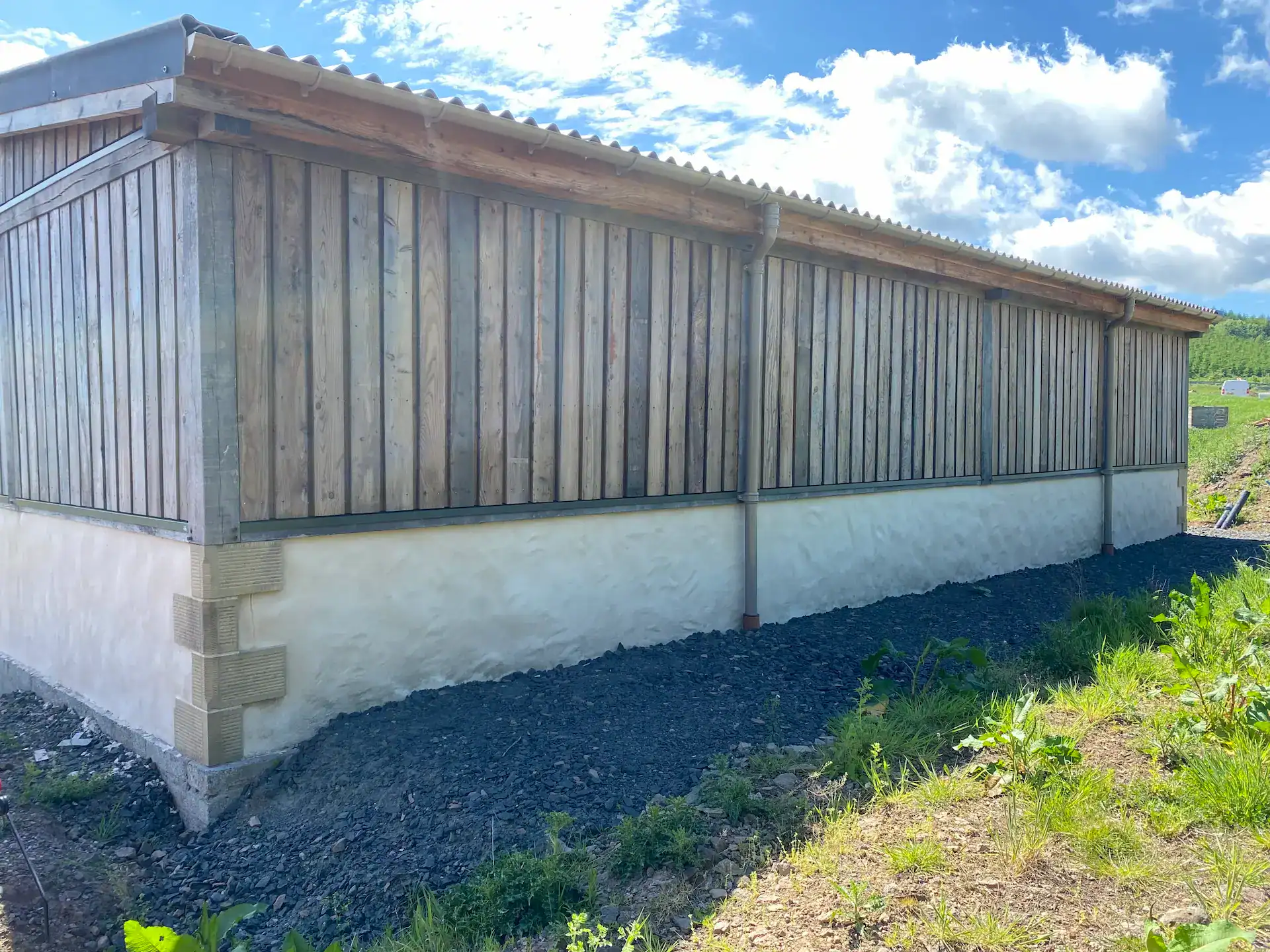
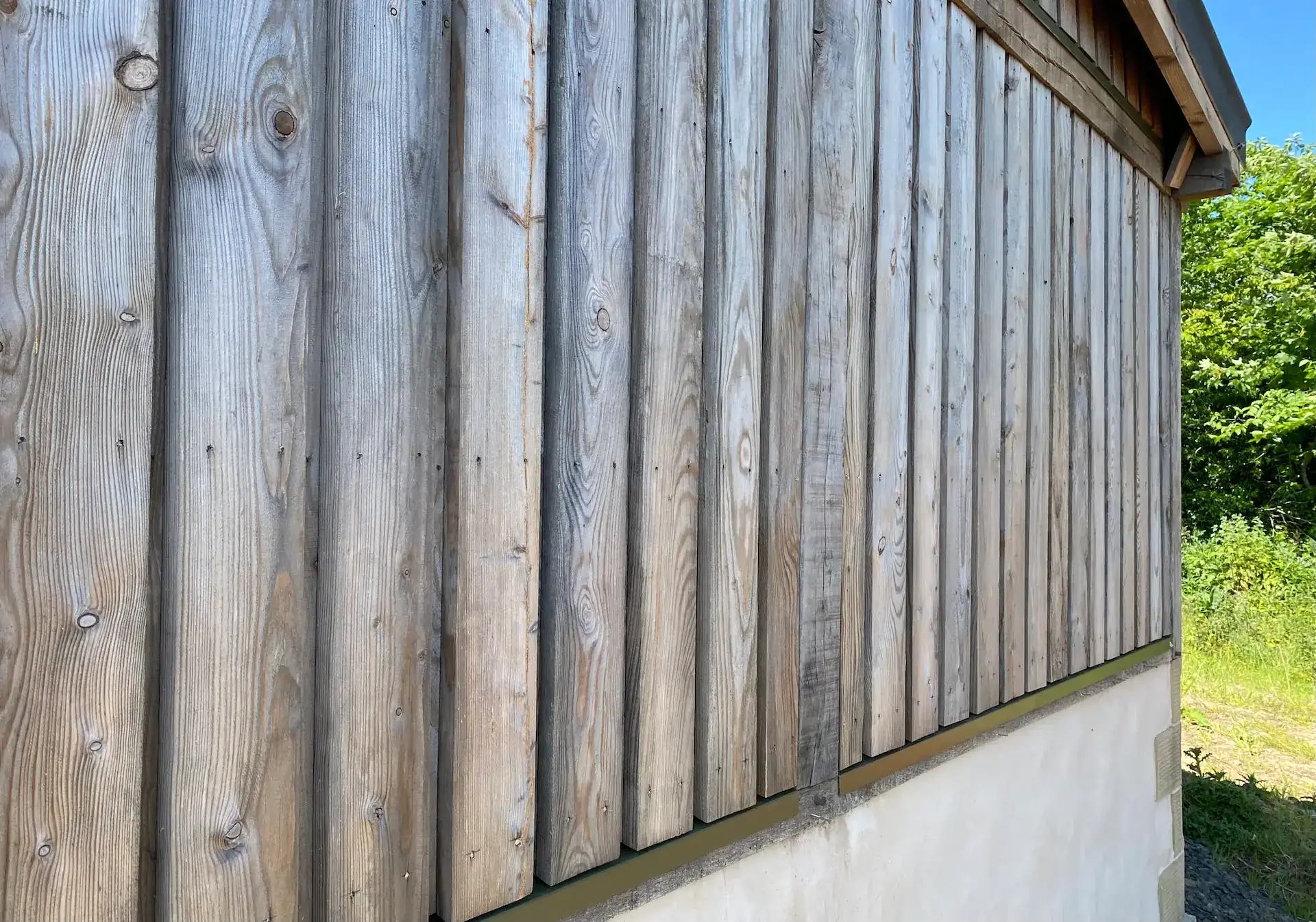
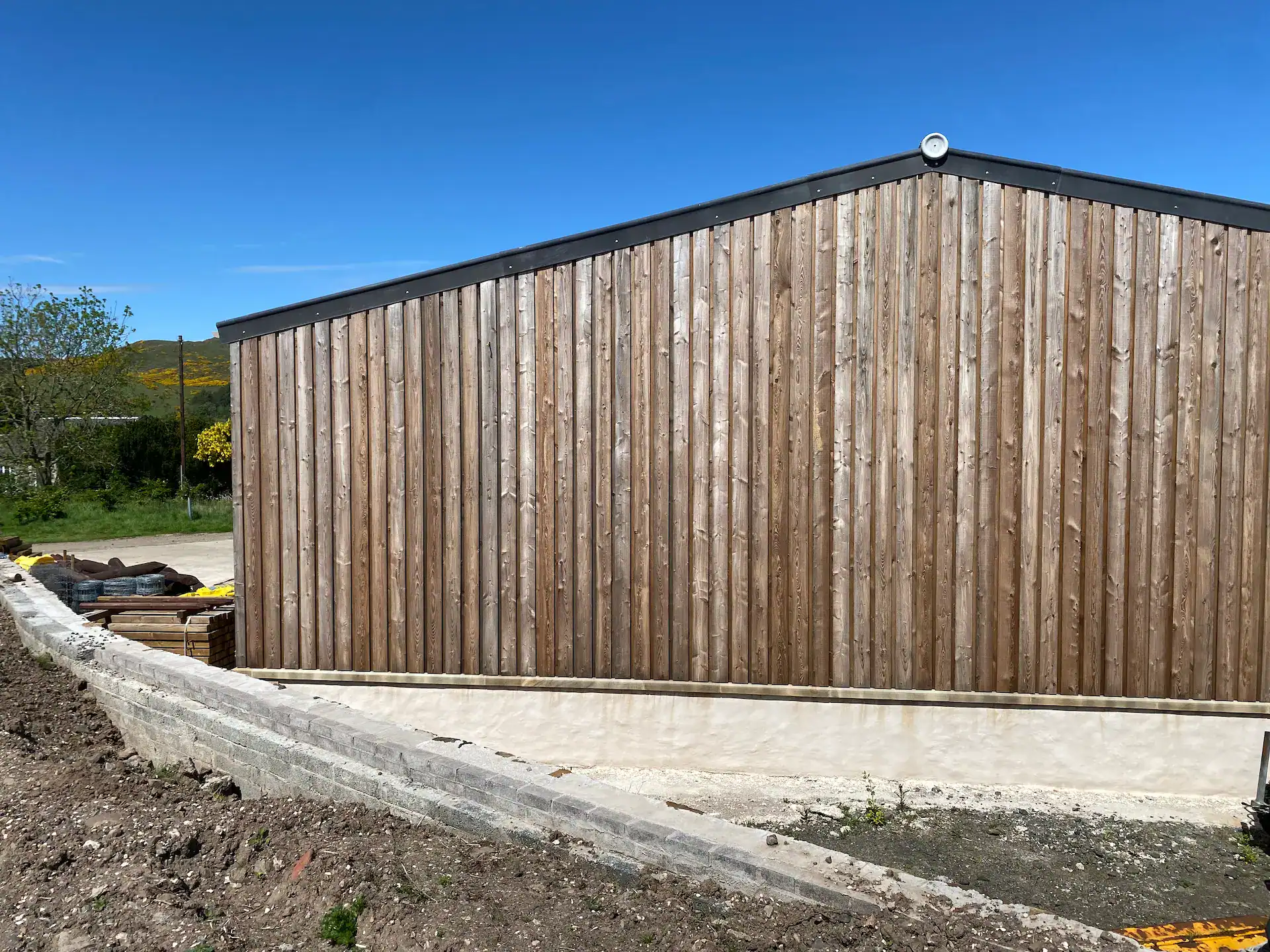


The board on board cladding on this building is a little more than a year old, the clad walls are unsheltered and subject to high exposure of both rain and UV.
This building has the same grade board on board cladding used internally, to separate a farm office from the rest of the shed. Together these images provide a fantastic example of larch’s colour change.
The external timber would have started as the same warm hue and took around a year in these conditions to fade to silver. The internal larch will never be subject to the same exposure, and its fresh original colour will be preserved.
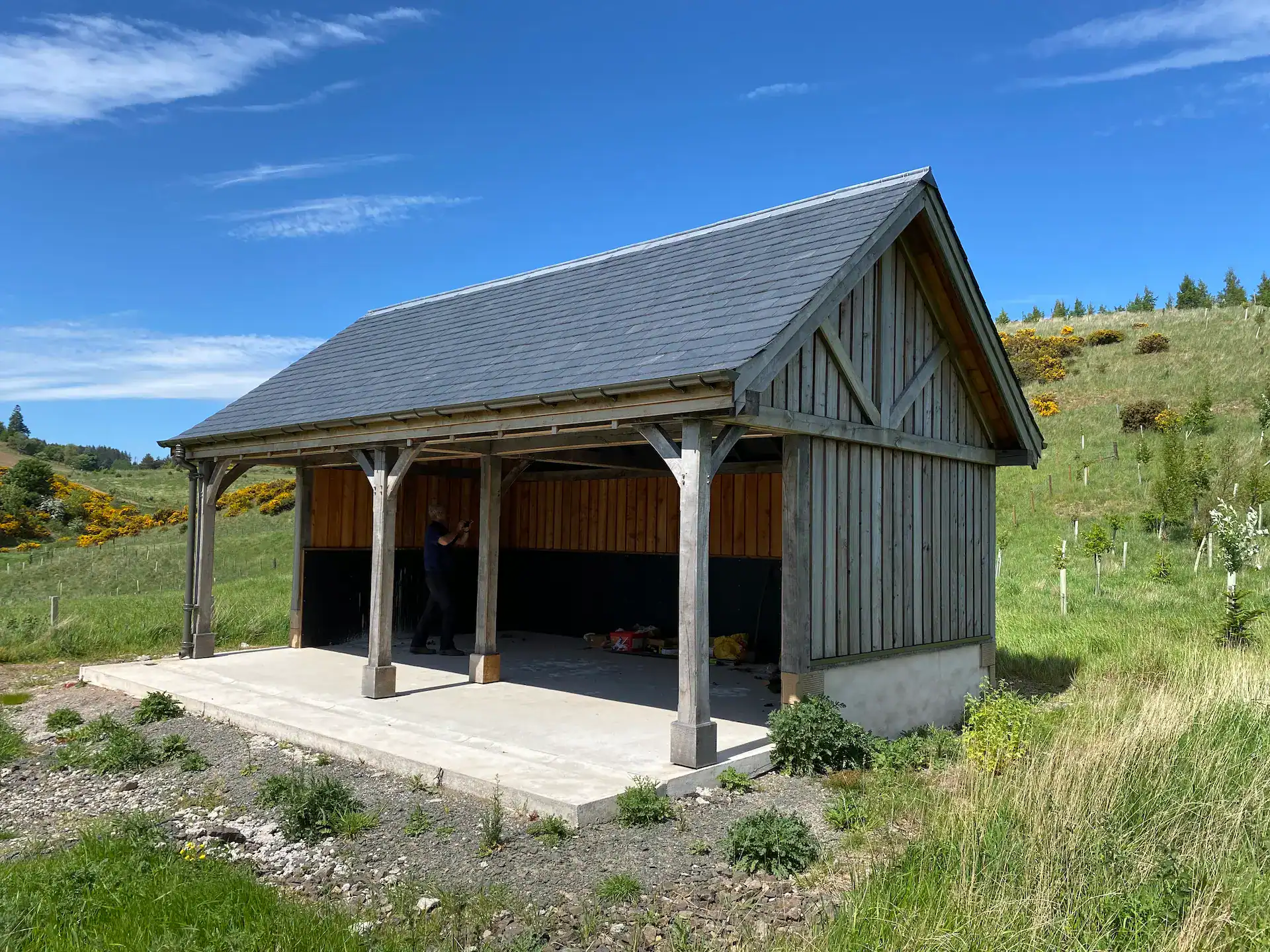

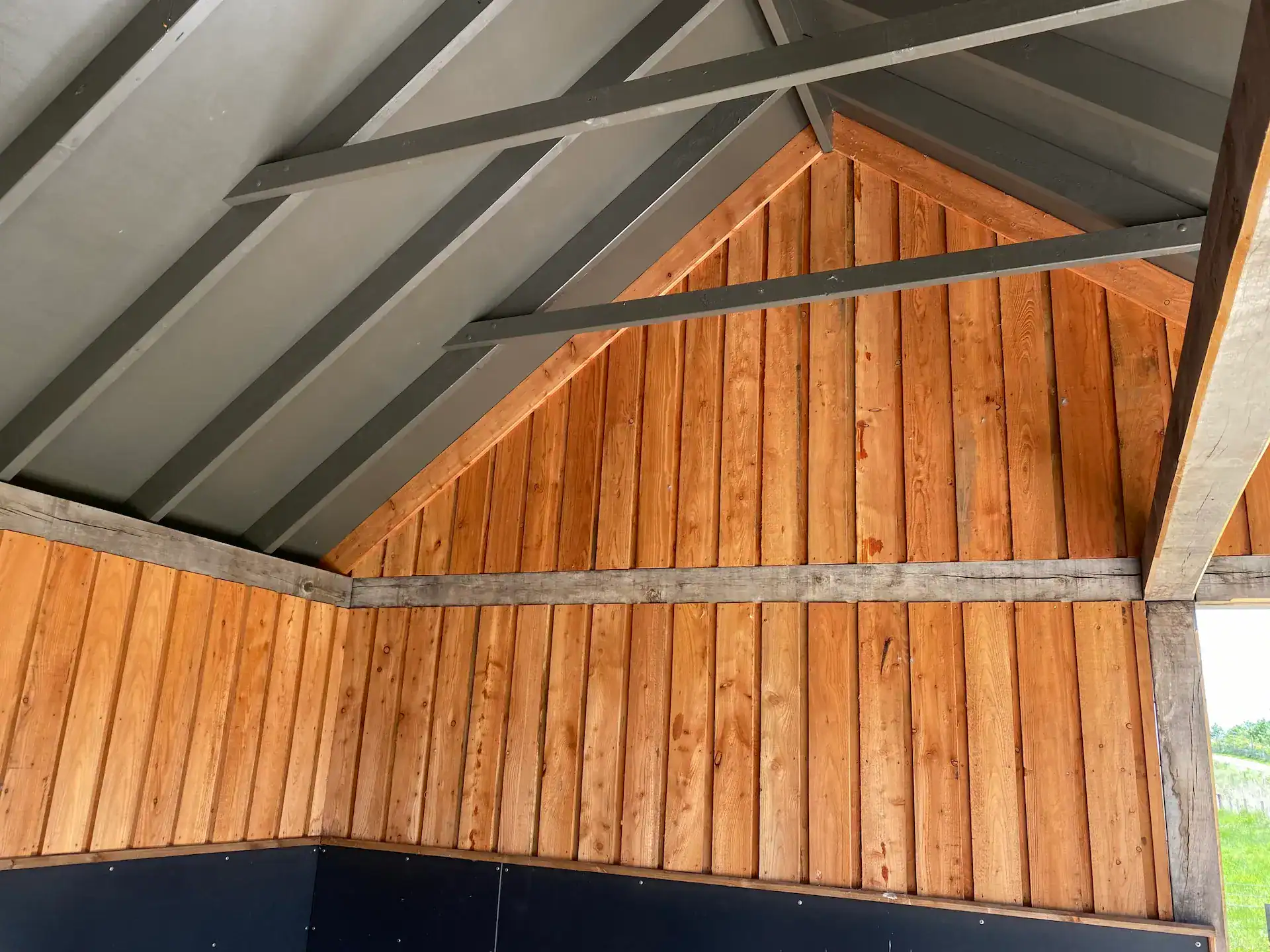
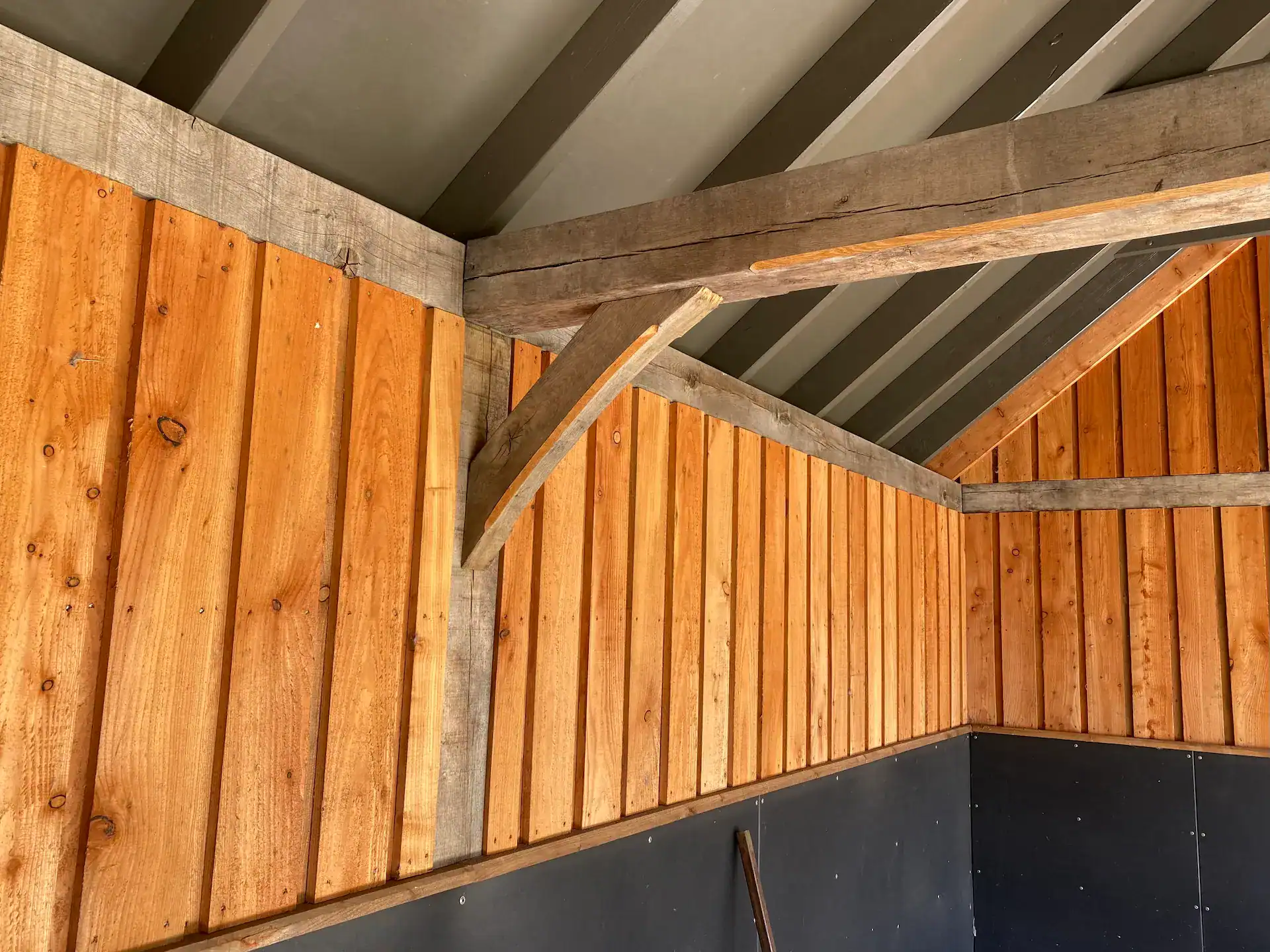
This is another building from the same site in east Fife. Again, the board on board cladding is around a year old. Once again, the internal cladding has and will continue to retain its fresh look.
Batten on board clad garden hut
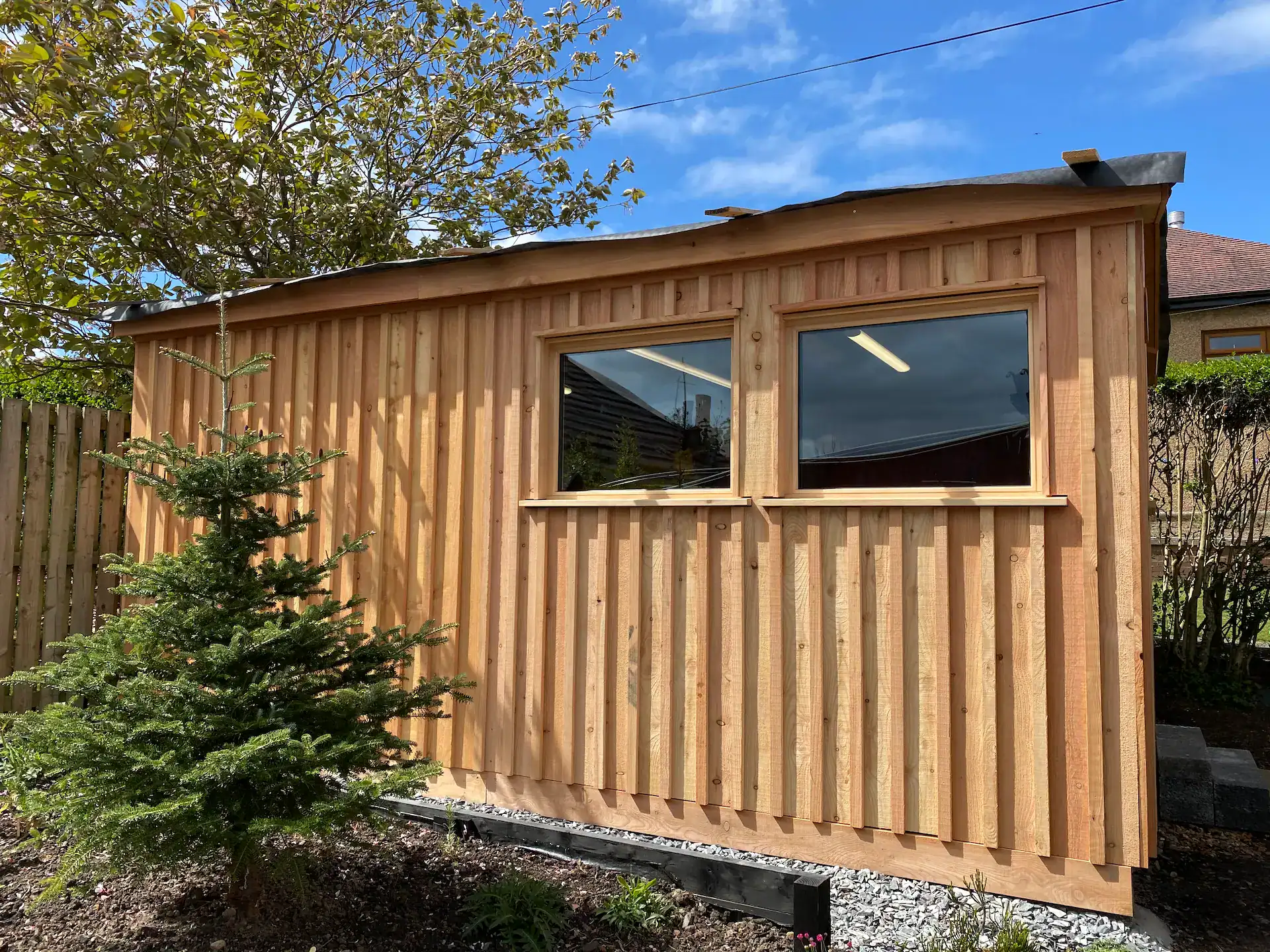
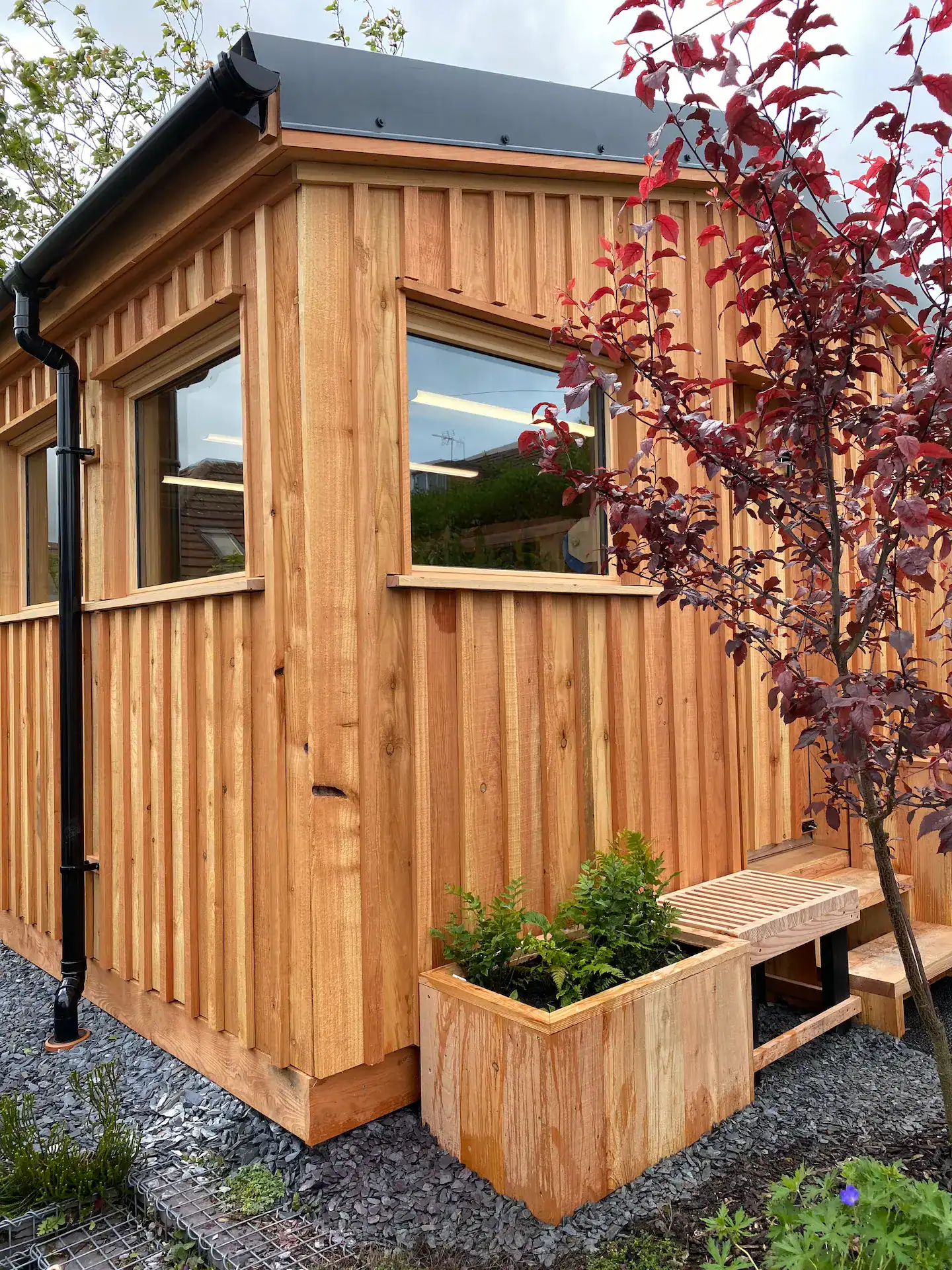
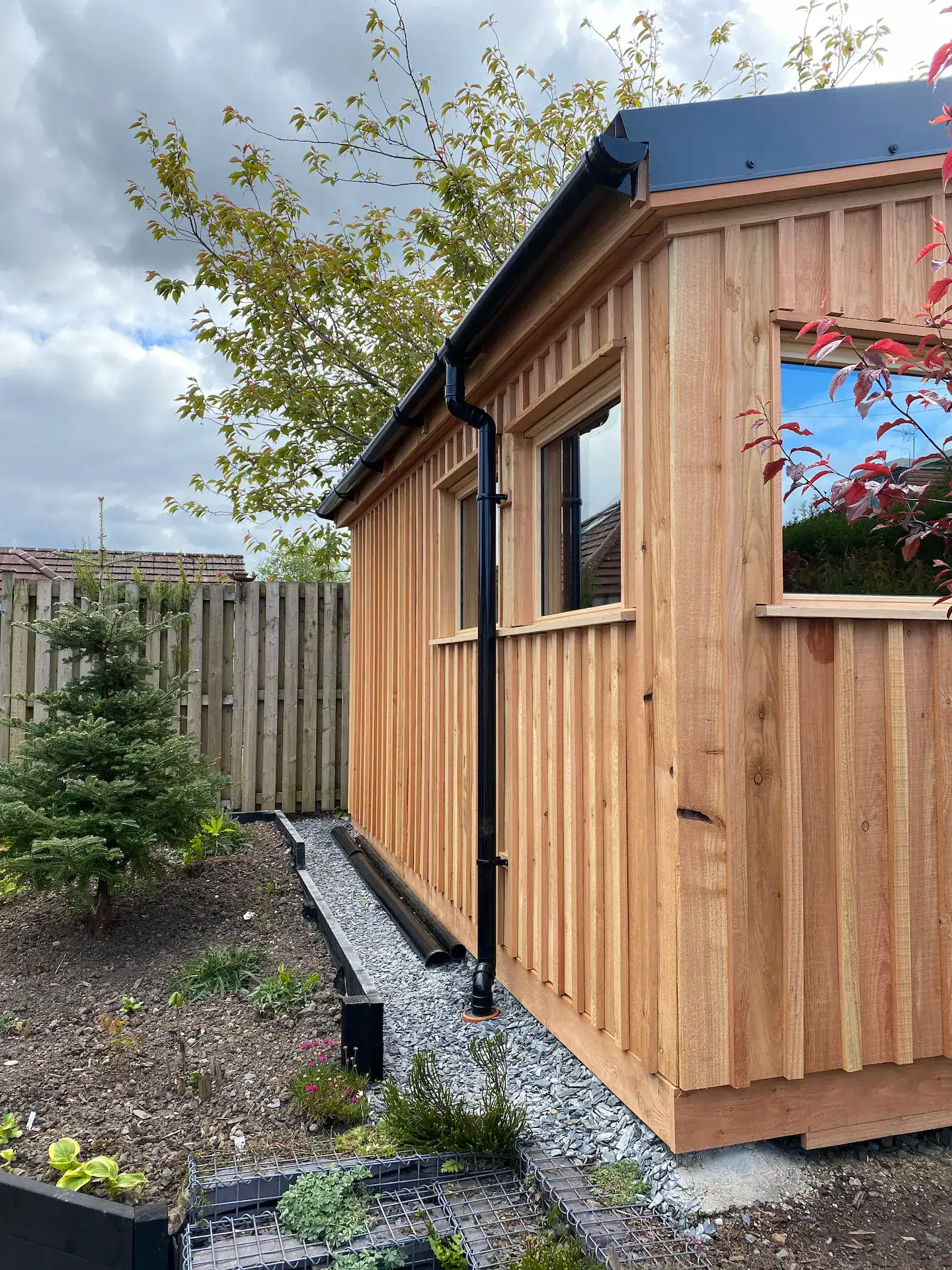
This is another very illustrative example of larch’s’ colour change, particularly how not all parts of a building will experience the same level of greying. Scottish Wood supplied batten on board larch cladding to this garden hut in 2020. These photos show the hut newly clad in freshly sawn larch.

Four years later, this is the same hut in 2024 – the silvering seen in the later photo won’t have taken all four years to transition to this colour.
The walls of the hut have been exposed to both rain and sun and have silvered completely. However, some of the original larch colour is still visible at the top of the walls, where the gutter shelters the timber from rainwater. The same can be seen under the window openings, where the overhanging windowsills provide both shade and shelter.