


Why we think naturally durable Larch is a better choice than treated softwood for cladding and decking
When choosing timber for cladding, decking, or other external projects, durability is one of the most important considerations!
In this post, we’ll compare the pros and cons of the two timber options you have for outdoor building materials: naturally durable timber, such as Scottish Larch, and non-durable timbers, such as Spruce.
Both materials have their place, but for many outdoor applications, naturally durable Larch offers clear long-term advantages in performance, maintenance, and user peace of mind.

What is meant by durability?
Durability refers to the wood’s natural resistance to biological decay – such as caused by moisture, fungi, or insects. Durable timbers can be placed outside in the elements, or in other wet environments, with minimal or no preservative treatment.
Non-durable timbers don’t have this natural moisture resistance, and overexposure to damp conditions will cause them to degrade over time, eventually leading to rot.
What makes some timbers naturally durable?
The natural durability of a timber depends on its species, structure, and chemical composition. In the case of Scottish Larch, durability comes primarily from its dense heartwood and high resin content. The resin acts as a protective barrier against insects and moisture, filling the wood’s pores to make it harder for pests and water to seep in.
What’s the difference between natural durability and treated timber?
Non-durable timbers, such as Spruce and Pine, must be pressure treated with chemical preservatives to make it suitable for external use. This process coats and penetrates the timber surface providing a protective layer, or envelope, around the core or centre of the timber.
Natural durability versus treated
Both materials have their place.
For external applications such as cladding or decking, naturally durable Larch offers clear advantages in looks, long term performance, and low maintenance.
For applications where the timber is out of sight and / or is in direct and constant contact with the soil, then treated softwood can provide a low cost option.
Low maintenance and long-term performance
One of the biggest advantages of Larch for cladding and decking is its low maintenance requirement.
Larch can be left without treatment, painting, or other coating, and will weather naturally over time, gradually turning a soft silver-grey. Importantly, this weathering does not affect the structural performance of the timber.
Treated softwoods, however, often rely on paints, stains, or some other surface coatings. Over time these will require regular maintenance and re-application, especially in exposed locations.
Larch Colouring & Weathering
How Scottish larch cladding and decking naturally silver and change over time.

Peace of mind in real-world use
On paper, treated softwoods perform well – but in practice, external timber is rarely left untouched! For example, when you are building a deck or an outdoor structure, or cladding a wall, you will almost certainly be:
- Cutting the timbers to length
- Drilling holes
- Nailing and screwing
- Using chisels or routers
Each of these actions will break through that protective layer of treatment and can expose some of the untreated centre to moisture and fungal or insect attack. While end-grain treatments can (and should!) be applied, they add extra steps to the task and are frequently left undone.
With naturally durable Larch the protection is inherent in the timber itself. If a board is trimmed, drilled, or adjusted in any way, the timber still keeps its resistance to decay – offering a greater tolerance in real world conditions.
Cost – higher upfront, but better over time
It’s important to acknowledge that Larch is more expensive than treated Spruce or Pine at the point of purchase. This can make treated softwood appealing for projects with tight initial budgets.
However, when viewed over the lifespan of the product, Larch often proves the better value for money choice, thanks to its reduced maintenance costs, no requirements for re-treatment, and longer service life in exposed conditions.
For many customers, the higher initial cost is offset by time saved, fewer materials used over the years, and greater confidence in long-term performance.
Direct soil contact
It’s important to note that treated softwoods can outperform Larch in situations where the timber is in constant, direct contact with the ground. This is because constant ground contact exposes the timber to constant moisture and fungal attack, and pressure treatment that penetrates deep into in the timber may provide a stronger protection against this form of decay long term.
However, using treated timber in gardens where plants and vegetables grow has been considered a potentially unsafe practice in the past, as the chemicals used in the treatment process can leach into the soil. More modern treatment processes typically use less aggressive chemicals, but it is important to check their suitability with the manufacturer.
It’s a balanced choice!
Treated softwoods remain a viable and widely used option and can particularly suit projects where initial cost is of primary concern, or the timber isn’t subject to too much expose to the elements. If the project area has good ease of access, then ongoing maintenance also may not be such a burden.
However, for cladding and decking where longevity, minimal maintenance, and durability matter – naturally durable Scottish Larch offers clear advantages.
Why we choose Larch at Scottish Wood
At Scottish Wood, we use homegrown Scottish Larch for our cladding and decking because it performs exceptionally well in the Scottish climate. It offers durability without chemical treatment, ages gracefully, and provides customers with confidence that their timber will stand the test of time.
If you’re deciding between naturally durable timber and treated softwood, we’re always happy to talk through the options and help you choose the best material for your project.
Interested in using Larch for an upcoming project?
For more information on Larch cladding, decking, framing material, and more, visit the products and services section of our website. There you can find detailed information and best practise guides for installing and maintaining your Larch fixtures.


Media credits (all images are of Scottish Wood products and materials):
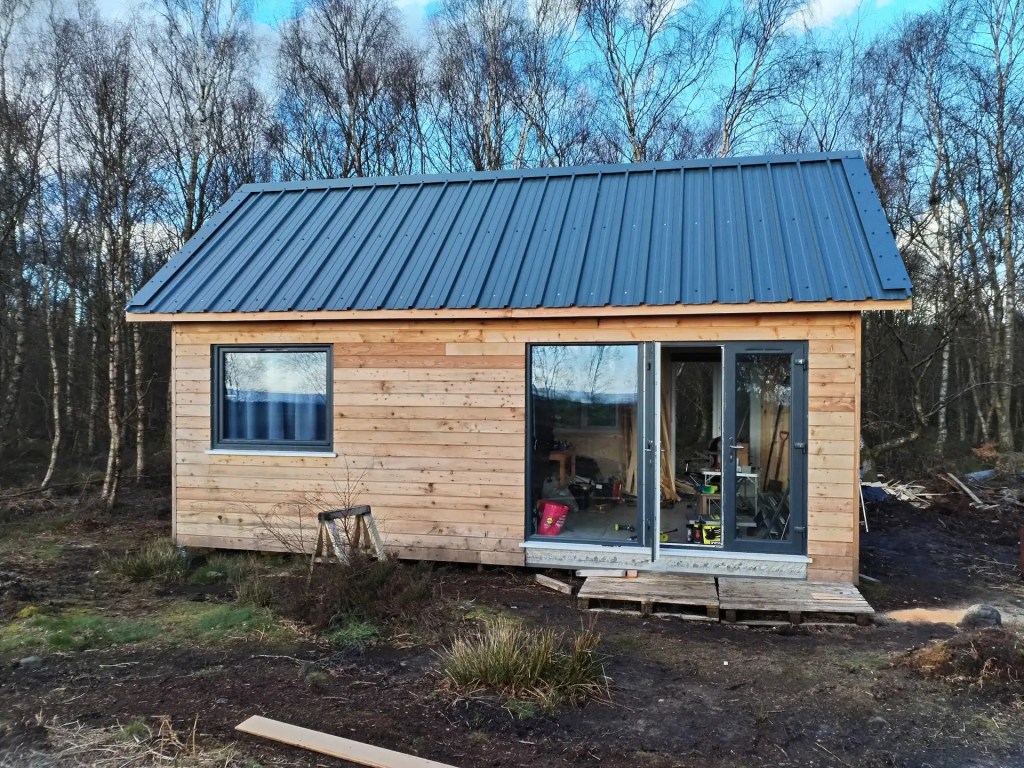
Feature photo: Thornwood Design & Build – Haringey College. Shiplap clad woodland hut: Des Kelly – Carnock Hutting Site. Round decking circles: Stone Water Wood Light – Meggetland. All other photos supplied by Scottish Wood or other private customers.


